This course equips learners with the essential skills to communicate clearly, professionally, and effectively in the workplace. Participants learn a practical writing process that helps them define their goals, understand their audience, choose the right communication medium, structure their message, and refine their writing style for maximum impact.
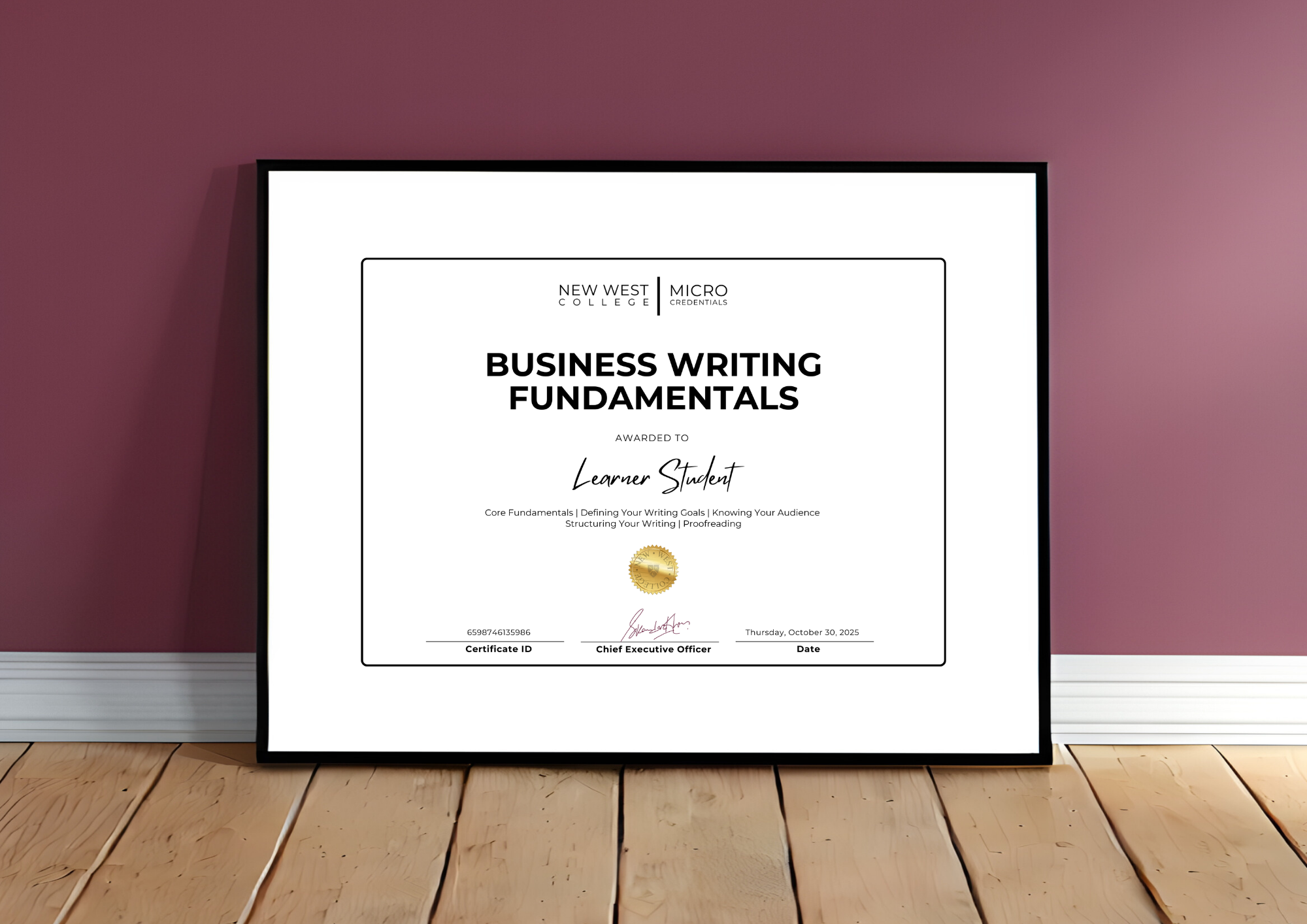
Earn this credential. Anywhere, anytime.
Learning Outcomes:
➊ Define clear writing goals that align with business objectives.
➋ Analyze audience needs, perspectives, and knowledge levels to tailor tone and content appropriately.
➌ Select the most effective written communication medium for a given message.
➍ Structure written communication using logical and organized frameworks.
➎ Apply editing and proofreading techniques to strengthen clarity and professionalism.
Requirements:
There are no specific entry requirements for this Micro Credential, however, this credential is ideal for:
New or aspiring professionals who need foundational business writing to support their current or future roles.
Employees who are primarily involved in report writing and other writing heavy tasks
Course Content:
This course begins by exploring the power of effective business writing and the role written communication plays in professional credibility and career success. Learners reflect on the many forms of writing they produce in the workplace, from emails and reports to proposals and internal documentation. The course then introduces a structured writing process, starting with defining clear goals. Learners examine the three primary purposes of business writing: to inform, to persuade, and to convey goodwill, and practice adapting tone and content to support each objective.
Next, learners develop strategies for analyzing their audience. They consider relationship dynamics, reader perspective, and knowledge level in order to tailor tone, vocabulary, and depth of explanation. Building on this foundation, the course guides learners through selecting the most appropriate communication medium. Through practical scenarios, they compare emails, instant messages, reports, and letters, evaluating factors such as urgency, formality, complexity, and documentation needs.
The course then addresses structure, introducing the broad-narrow-broad framework to organize paragraphs and full documents. Learners practice putting key information first, improving logical flow, and ensuring their message is easy to follow. After drafting, participants learn the distinction between editing and proofreading. They apply a two-step review process that first strengthens content, clarity, and organization, then corrects grammar, spelling, and punctuation errors using structured review techniques.
Finally, the course focuses on writing style. Learners adopt practical strategies to write concisely by eliminating unnecessary words, avoid jargon and overly complex language to maintain clarity, and communicate with courtesy and professionalism. The course concludes with a review of business writing do’s and don’ts, reinforcing habits that improve effectiveness, credibility, and reader engagement.

20 Hours
Advanced Social Media Marketing equips learners with the skills to go from tactical posting to strategic brand storytelling. Students will leave the course ready to listen intelligently, engage meaningfully, measure precisely, and create content that connects—skills essential for any modern digital marketer.