
This course gives learners a clear, practical roadmap for finding meaningful employment in today’s competitive job market. The course supports individuals who are entering the workforce, returning after a break, or ready for a career change. It simplifies the job search process and helps learners understand how to identify the right opportunities, craft strong application materials, and present themselves confidently in interviews.
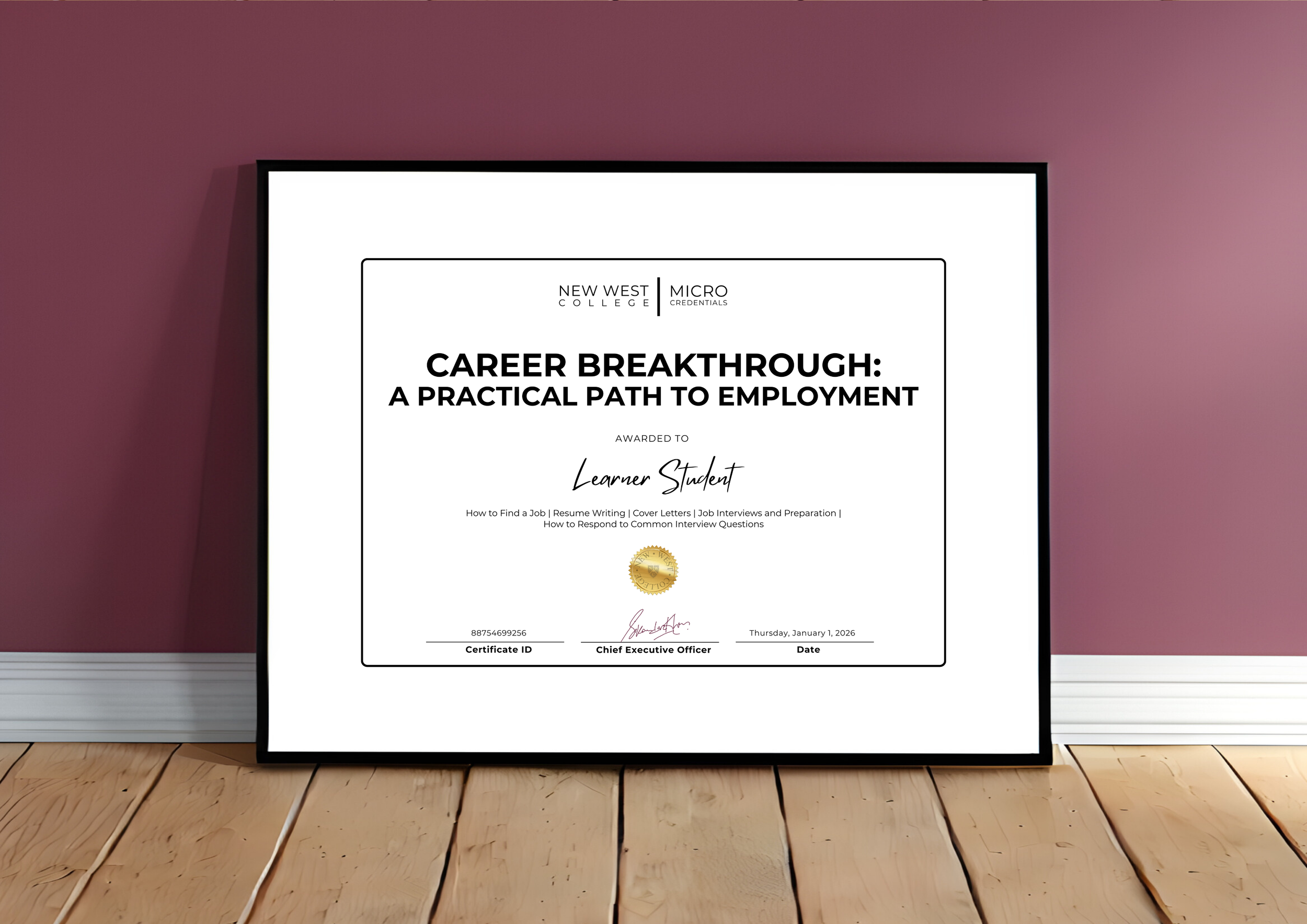
Earn this credential. Anywhere, anytime.
Learning Outcomes:
➊ Identify job opportunities that align with their skills, experience, and career goals.
➋ Write a targeted, professional resume that highlights measurable achievements.
➌ Craft a compelling cover letter that adds context, personality, and clarity.
➍ Prepare effectively for interviews using research, story preparation, and proven frameworks.
➎ Use the CAR method (Context, Action, Result) to respond to behavioral questions.
Requirements:
There are no specific entry requirements for this Micro Credential, however, this credential is ideal for:
Individuals seeking to successfully find meaningful employment opportunities.
Employees in the career services industry wanting to help job-seekers.
Course Content:
The course begins by helping learners define what they want from their next role. They reflect on job preferences such as industry, responsibilities, salary, schedule, and workplace culture. Once they gain clarity, the course guides them through the best places to look for opportunities, including job boards, company career pages, networking connections, and recruiters. Learners discover how to filter openings, expand searches, create shortlists, and stay efficient and focused rather than applying aimlessly.
Next, the course moves into preparing strong application materials. Learners study how to build a resume that acts not as a list of job duties, but as a compelling marketing tool. They learn what to include, how to organize content, and how to write concise, action-driven bullet points that emphasize measurable accomplishments. The course also covers resume formatting, consistency, stylistic choices, and editing techniques that make documents clean and easy to scan.
From there, learners transition into writing effective cover letters. They explore how cover letters complement resumes by adding narrative, context, and personality. The course shows how to structure a focused cover letter—from crafting a strong introduction to making a clear value proposition and ending with a confident call to action. Learners practice highlighting their top selling points and tailoring each cover letter to the role and company.
The course then shifts into interview preparation. Learners walk through essential etiquette, from punctuality and professionalism to communication, body language, and thoughtful closing questions. They learn how to research the company, prepare their “why,” and build a personal story bank of examples they can draw from during conversations. The course reinforces techniques for staying calm, speaking clearly, and answering questions in a structured and engaging way.
Finally, learners dive deeper into answering common interview questions. They explore strategies for responding to questions about strengths, weaknesses, goals, achievements, setbacks, and conflict. The course introduces the CAR method as a simple, memorable framework for behavioral questions, helping learners tell clear stories with defined context, action, and results. By practicing these techniques, learners build a strong foundation for handling both predictable and unexpected questions.

20 Hours
Advanced Social Media Marketing equips learners with the skills to go from tactical posting to strategic brand storytelling. Students will leave the course ready to listen intelligently, engage meaningfully, measure precisely, and create content that connects—skills essential for any modern digital marketer.