This course equips managers and professionals with the practical tools to prevent, manage, and resolve workplace conflict effectively. Learners explore the root causes of tension, common conflict response styles, structured mediation techniques, strategies for de-escalating anger, and clear steps for addressing bullying or abusive behavior. The course emphasizes proactive leadership, emotional intelligence, and constructive dialogue to create healthy, productive teams.
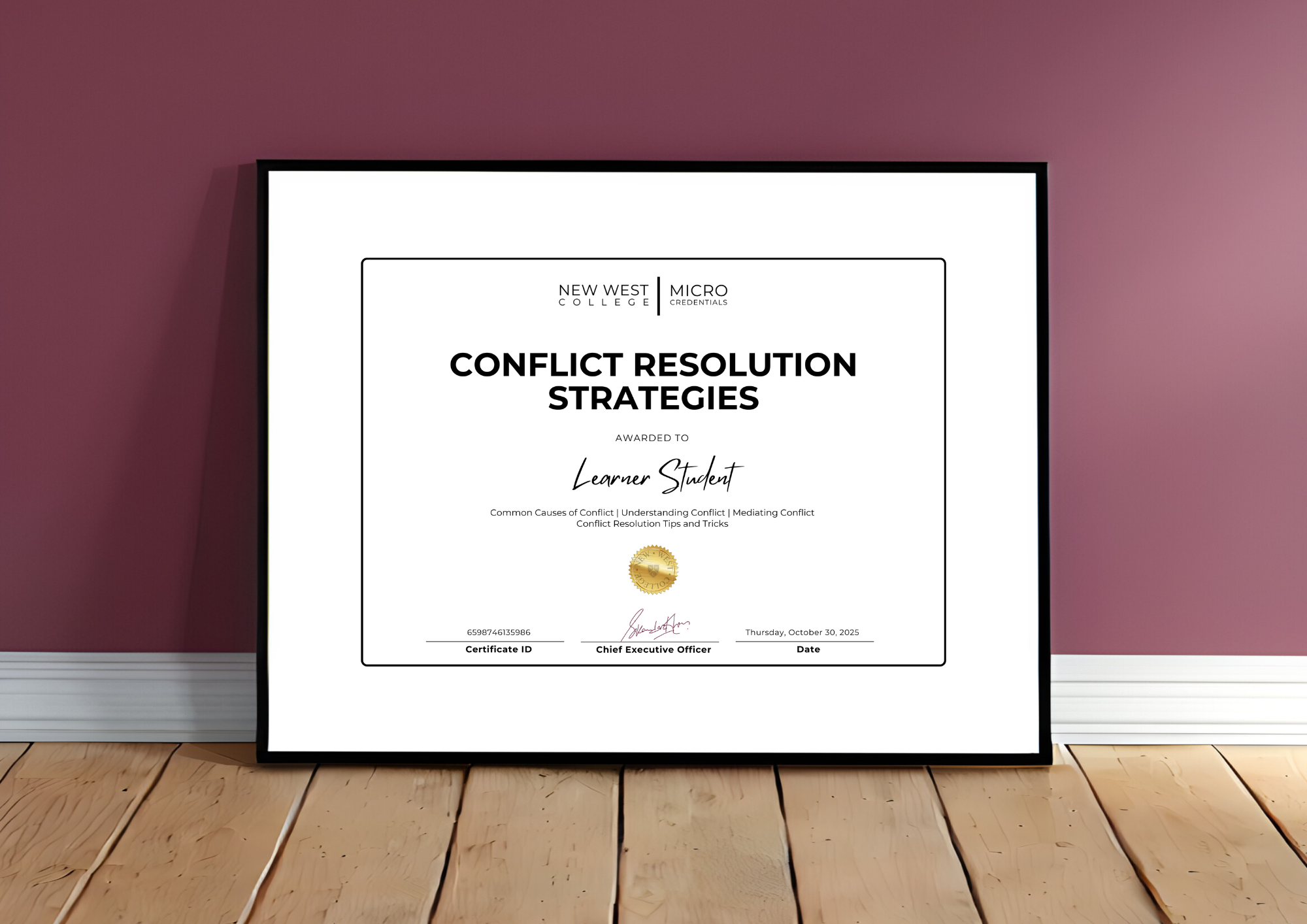
Earn this credential. Anywhere, anytime.
Learning Outcomes:
➊ Identify common root causes of workplace conflict and diagnose underlying issues.
➋ Distinguish between five common conflict response styles and determine when each is appropriate.
➌ Apply a structured six step mediation process to resolve disputes between employees.
➍ Recognize signs of workplace bullying and differentiate between healthy conflict and abuse.
➎ Implement preventive policies and intervention strategies to address abusive conduct.
Requirements:
There are no specific entry requirements for this Micro Credential, however, this credential is ideal for:
Professionals faced with difficult interpersonal challenges in their workplace.
Managers tasked with handling difficult conversations and handling employee conflicts.
Course Content:
The course begins by examining the common causes of workplace conflict, including poor communication, clashing personalities, competing interests, different values, ambiguity in roles or expectations, and performance concerns. Learners are guided to “get to the root of the problem” before attempting solutions, reinforcing the principle that effective resolution starts with accurate diagnosis.
Next, participants explore five common ways people respond to conflict: avoid, appease, compete, bargain, and collaborate. Each approach is examined in terms of strengths, risks, and appropriate application. Learners develop the judgment needed to guide teams toward the most constructive response based on context, urgency, and relationship dynamics.
The course then introduces a structured six step mediation framework for managers. Learners practice setting ground rules, facilitating the exchange of perspectives, defining the problem clearly, identifying underlying interests versus stated positions, brainstorming solutions, and reaching mutually acceptable agreements. Emphasis is placed on neutrality, equal participation, and guiding rather than dictating outcomes.
Attention then shifts to handling emotionally charged situations. Participants learn how to meet anger with understanding instead of escalation. A four step approach outlines how to listen first, gather facts, identify practical solutions, and restore order while setting clear behavioral expectations. Special guidance is provided for moments when situations escalate and require cooling off periods or HR involvement.
The course also addresses workplace bullying and abusive conduct. Learners examine subtle and overt signs of bullying, the physical and emotional impact on employees, and the importance of zero tolerance policies. Clear prevention and intervention steps are outlined, including documenting incidents, communicating consequences, and partnering with HR to take appropriate action.
Finally, learners develop facilitation skills through practical techniques such as paraphrasing, using incomplete sentences to prompt clarity, finding shared baselines, comparing past and future behaviors, asking for advice, and acting as a structured moderator during heated discussions. The course reinforces that well managed conflict can strengthen trust, improve communication, and drive positive organizational change.

20 Hours
Advanced Social Media Marketing equips learners with the skills to go from tactical posting to strategic brand storytelling. Students will leave the course ready to listen intelligently, engage meaningfully, measure precisely, and create content that connects—skills essential for any modern digital marketer.