


Learn to lead with integrity by clarifying your values, embedding ethics into culture and daily decisions, and applying a structured framework to navigate workplace dilemmas fairly. This course also builds practical skills for developing ethical employees, evaluating performance objectively, and identifying and managing conflicts of interest before they escalate.
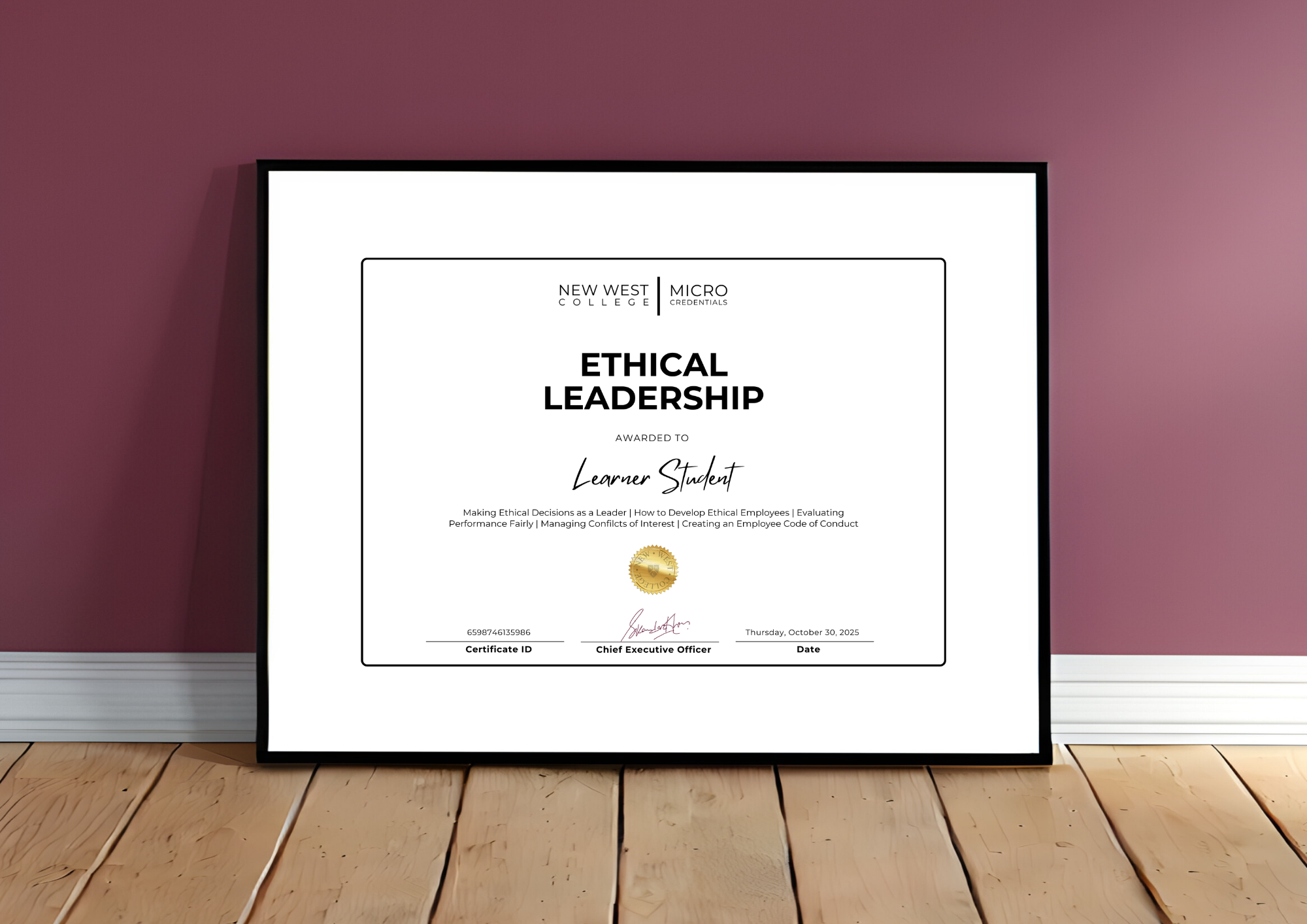
Earn this credential. Anywhere, anytime.
Learning Outcomes:
➊ Define ethical leadership and explain why it matters in modern organizations.
➋ Integrate ethics into company culture through explicit values and consistent practice.
➌ Use a structured framework to make ethical decisions in complex situations.
➍ Identify, prevent, and manage conflicts of interest in the workplace.
➎ Model ethical behavior that fosters trust, accountability, and transparency.
Requirements:
There are no specific entry requirements for this Micro Credential, however, this credential is ideal for:
New or experienced managers looking to integrate Ethical Leadership into their leadership style.
Course Content:
The course begins by defining ethical leadership as living one’s values and acting with integrity regardless of circumstance. Learners explore why ethics start at the top and how leadership behavior influences employee morale, culture, and brand reputation. The 4 V Model of Ethical Leadership provides a structured foundation, guiding leaders to clarify their values, align them with organizational vision, communicate them clearly, and demonstrate them through consistent action.
Next, learners examine how to build an ethical company culture. The course explains how culture reflects shared values and moral standards, and how leaders can embed ethics into hiring, onboarding, performance management, and recognition systems. Participants explore the broader impact of ethical culture on employees, customers, society, and the environment.
The course then introduces a five-step ethical decision-making framework. Learners practice identifying ethical dimensions in workplace issues, gathering facts, evaluating legal and policy considerations, testing options, and implementing responsible decisions. The four dimensions of ethical decision-making, legality, policy, morality, and fairness, help leaders approach dilemmas with clarity and balance.
Participants then focus on developing ethical employees by establishing clear guidelines, maintaining open communication, and reinforcing ethical expectations through training and example. The importance of continuous dialogue around ethics is emphasized to prevent misconduct and promote accountability.
The course also covers evaluating performance fairly, highlighting objectivity, consistency, respect, inclusivity, and evidence-based assessment. Leaders learn structured best practices to reduce bias and ensure ethical responsibility in performance reviews.
Finally, learners examine conflicts of interest. They explore common scenarios involving relationships, personal gain, and information misuse. The course outlines prevention strategies and a clear process for investigating, planning, and enforcing appropriate responses when conflicts arise.

20 Hours
Advanced Social Media Marketing equips learners with the skills to go from tactical posting to strategic brand storytelling. Students will leave the course ready to listen intelligently, engage meaningfully, measure precisely, and create content that connects—skills essential for any modern digital marketer.