
Foundations of Personal Finance helps learners build the skills and confidence to manage their money with clarity and control. Designed for individuals who are new to personal finance, this course offers clear explanations, relatable examples, and practical tools that make budgeting, saving, and financial planning feel achievable. Throughout the program, learners explore real-world strategies that help them reduce stress, make informed decisions, and create a sense of long-term financial stability.
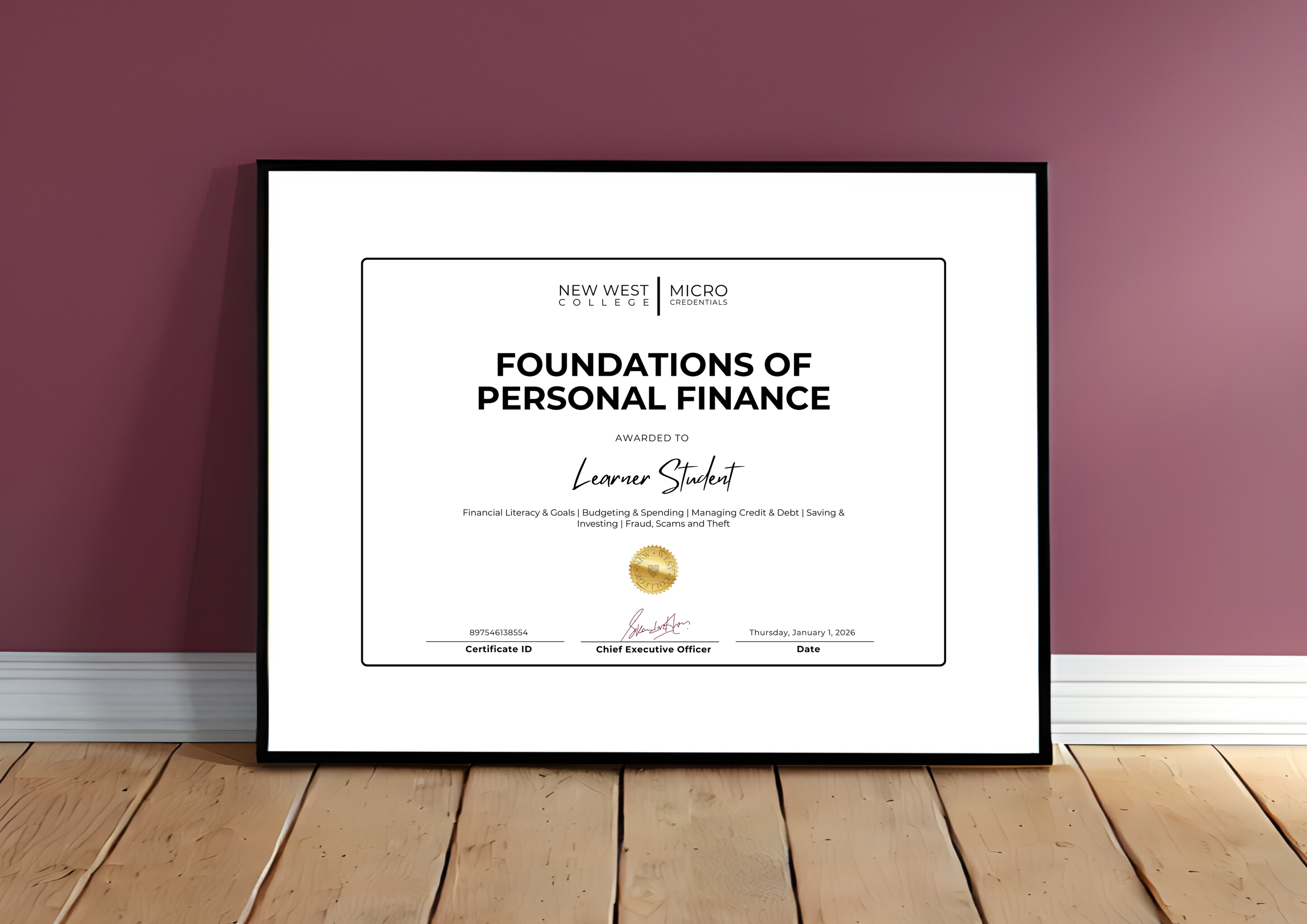
Earn this credential. Anywhere, anytime.
Learning Outcomes:
➊ Explain core financial concepts and set meaningful, achievable goals.
➋ Build and maintain a realistic monthly budget.
➌ Use credit wisely and understand how to manage and reduce debt.
➍ Establish savings habits and understand investing fundamentals.
➎ Identify fraud and scams and take steps to safeguard their personal information.
Requirements:
There are no specific entry requirements for this Micro Credential, however, this credential is ideal for:
Individuals wanting to better manage their personal finances.
Course Content:
The course begins by introducing the essentials of financial literacy and helping learners understand why these skills matter in daily life. They explore foundational terms, reflect on their own financial habits, and learn how to set clear and realistic goals using the S.M.A.R.T. framework. By understanding what they want to achieve and why, learners build a strong starting point for the rest of their financial journey.
From there, the course shifts into budgeting and smart spending. Learners discover how to track their income and expenses, categorize their spending, and identify patterns that may be holding them back. They also learn practical strategies for reducing costs, distinguishing between needs and wants, and making thoughtful spending choices. This section builds a sense of control—helping learners feel more prepared for both everyday life and unexpected expense.
As the course progresses, learners take a closer look at credit and debt. They explore common credit products, how interest works, and what it means to maintain a healthy credit history. Realistic techniques for managing debt, avoiding high-interest pitfalls, and paying down balances give learners tools they can apply immediately. This leads naturally into conversations about savings and investing, where they learn why saving matters, how an emergency fund works, and how investing can help their money grow over time. Key investing terms, the importance of diversification, and an introduction to Canadian tax-sheltered accounts help make long-term planning feel practical and approachable.
The final part of the course focuses on safety and protection. Learners explore the risks of online fraud, scams, and identity theft, and they learn how to spot red flags before they become damaging. With simple habits and awareness, they discover how to keep their information secure and what to do if something goes wrong. By the end, all these skills come together as learners create their own personalized financial fitness plan—an action-focused approach that helps them stay motivated and continue making progress long after the course ends.

20 Hours
Advanced Social Media Marketing equips learners with the skills to go from tactical posting to strategic brand storytelling. Students will leave the course ready to listen intelligently, engage meaningfully, measure precisely, and create content that connects—skills essential for any modern digital marketer.