Performance Management Essentials helps learners understand how to guide employee performance with clarity, consistency, and confidence. Rather than treating performance reviews as one-off events, this course teaches a continuous, people-centered approach that strengthens communication, engagement, and accountability. Learners explore the full performance cycle, from setting expectations and offering feedback to improving underperformance and developing high performers. By the end, they will feel more capable of supporting individuals, teams, and managers through a structured and encouraging performance management process.
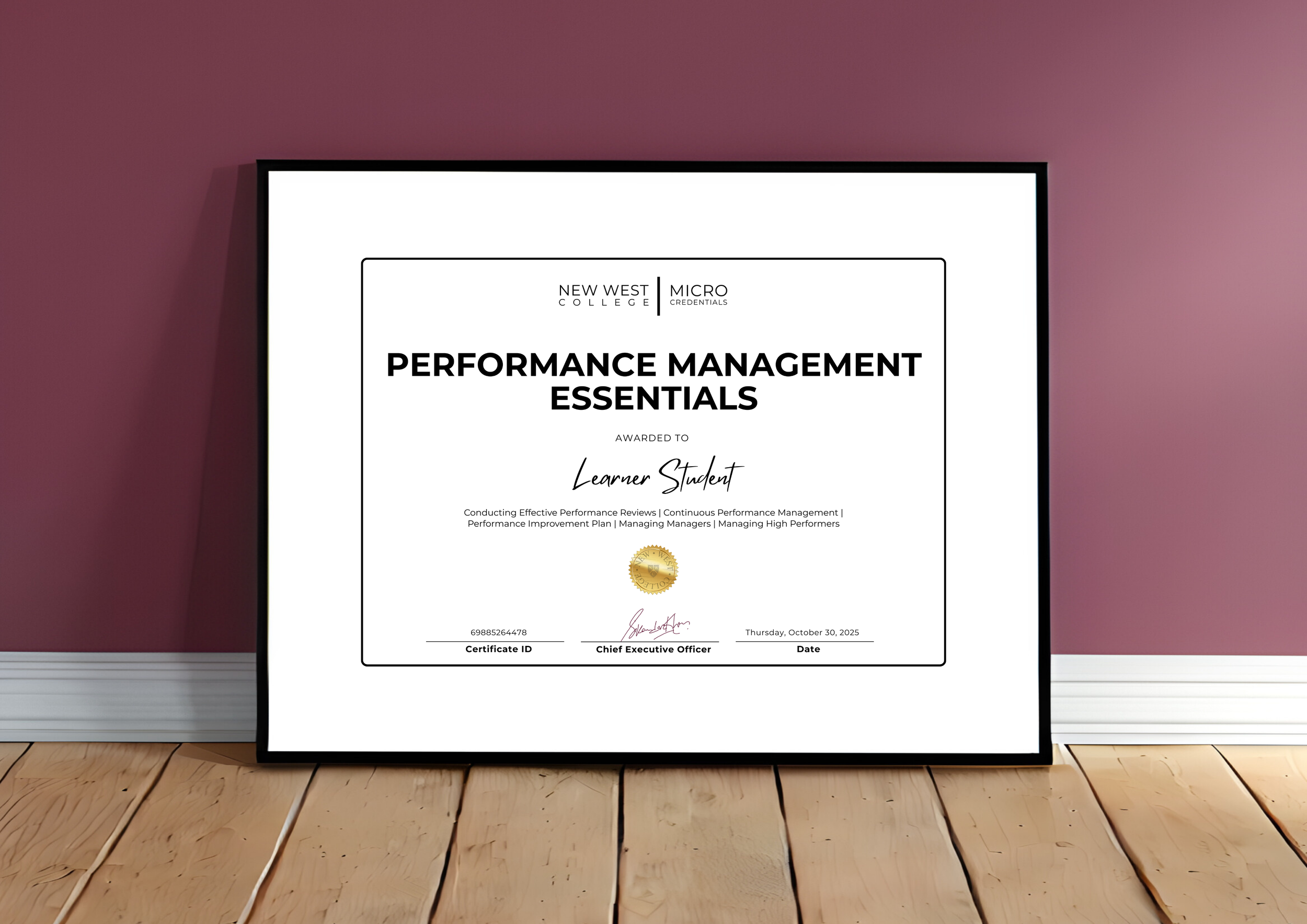
Earn this credential. Anywhere, anytime.
Learning Outcomes:
➊ Explain the full performance management cycle and why it must operate continuously.
➋ Set clear expectations and SMART objectives that align individual work with organizational goals.
➌ Deliver constructive, specific, and actionable feedback with confidence.
➍ Improve poor performance through clear documentation, supportive coaching, and structured improvement strategies.
➎ Engage and retain high performers through challenge, recognition, and growth opportunities.
Requirements:
There are no specific entry requirements for this Micro Credential, however, this credential is ideal for:
Managers seeking to successfully manage their employees and conduct performance reviews.
Employees looking move into management roles.
Course Content:
The course begins by exploring the purpose and principles of performance management. Learners examine how clear expectations, open communication, and shared understanding set the stage for strong performance. They study the full cycle of planning, monitoring, and reviewing, and learn how ongoing conversations—rather than annual meetings alone—build trust and reduce misunderstandings.
Next, the course focuses on effective feedback and performance reviews. Learners practice giving feedback that is specific, balanced, and actionable, and they learn how to guide conversations that help employees understand where they stand and how to grow. The course reinforces the importance of two-way dialogue and shows how preparation leads to more productive outcomes.
From there, the course turns to managing underperformance. Learners explore how to identify issues early, understand root causes, and approach difficult conversations with clarity and support. They learn how to document concerns, set expectations, and use improvement plans to guide employees back on track. The course provides practical tools for staying objective, reducing conflict, and helping employees succeed.
The course then shifts to high performers and how to retain them. Learners explore strategies for keeping strong contributors motivated through challenge, recognition, autonomy, and growth opportunities. They learn how to foster an environment where high performers thrive while maintaining balance and fairness across the team.
Finally, the course addresses the unique dynamics of managing managers. Learners discover how to coach leaders, set expectations at a higher level, and ensure alignment across teams. They practice communication strategies that strengthen leadership confidence and help managers support their own employees effectively.

20 Hours
Advanced Social Media Marketing equips learners with the skills to go from tactical posting to strategic brand storytelling. Students will leave the course ready to listen intelligently, engage meaningfully, measure precisely, and create content that connects—skills essential for any modern digital marketer.