
Time Management Essentials gives learners the practical tools they need to take control of their time and use it with intention. Many people feel overwhelmed, rushed, or stretched thin, and this course helps them understand why. It introduces the fundamentals of time management, helping learners identify habits, patterns, and challenges that influence how they work. The goal is to build awareness, strengthen focus, and create healthier routines that support both productivity and well-being.
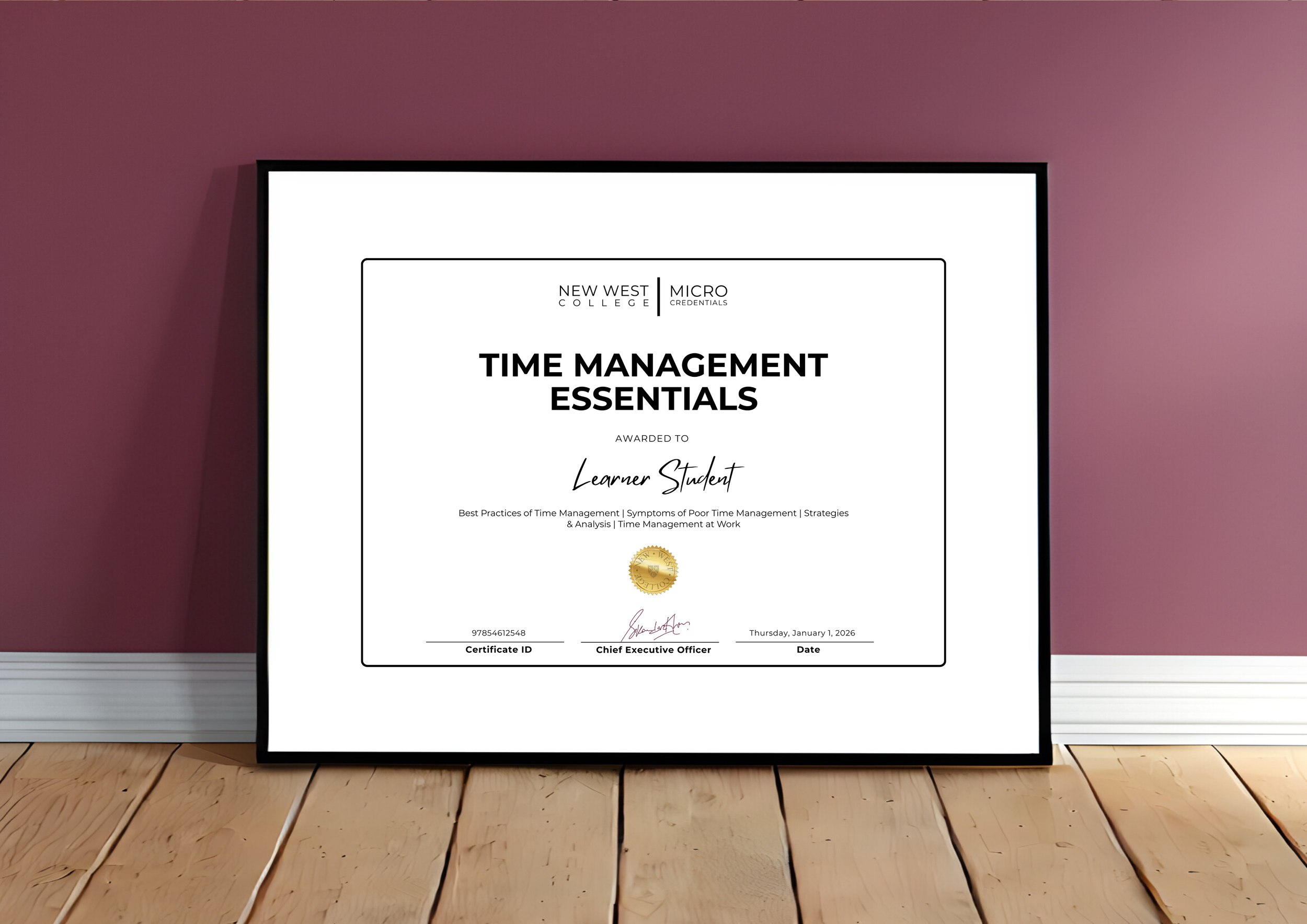
Earn this credential. Anywhere, anytime.
Learning Outcomes:
➊ Understand what effective time management is and how it directly impacts productivity and well-being.
➋ Track and analyze their time accurately to uncover habits, patterns, and areas for improvement.
➌ Prioritize tasks, set clear goals, and create practical schedules that support focus and follow-through.
➍ Apply proven strategies to manage distractions, reduce inefficiencies, and use time with intention.
➎ Build long-term habits that reinforce consistency, clarity, and work-life balance.
Requirements:
There are no specific entry requirements for this Micro Credential, however, this credential is ideal for:
Individuals seeking to successfully manage their time and output.
Employees looking to manage their work effectively to produce efficient results.
Course Content:
The course begins by redefining time management in simple, practical terms. Learners explore what it means to be in control of their time, how their daily choices influence their productivity, and why time management affects both work performance and personal fulfillment. This foundation helps them understand that effective time management isn’t about squeezing more into the day—it’s about aligning their time with the things that matter most.
Next, the course helps learners recognize subtle but common symptoms of poor time management. These may include chronic lateness, disorganization, overcommitting, or feeling constantly rushed. Learners quickly see how these symptoms affect their work, energy levels, and stress. By identifying the root causes behind these patterns, they become better equipped to address them before they escalate.
Once learners understand the problem, the course guides them into tracking their time. They learn how to choose a tracking method, categorize activities, and record their time accurately. This process shows them exactly where their hours go—often revealing surprising habits and hidden time-stealers. With real data in hand, learners analyze their patterns and identify opportunities to streamline, delegate, or eliminate tasks that drain time without adding value.
Building on this awareness, the course then introduces practical strategies that help learners use their time more intentionally. They discover how to set daily and weekly goals, tackle top priorities, create effective schedules, avoid multitasking, take regular breaks, and work within their natural productivity rhythms. These techniques help learners shift from reacting to their day to actively shaping it.
As learners progress, they explore the difference between working harder and working smarter. Instead of extending work hours or pushing themselves to exhaustion, they learn to manage their attention, energy, and environment more effectively. The course shows them how to reduce overwhelm, increase clarity, and create realistic boundaries that protect their time.

20 Hours
Advanced Social Media Marketing equips learners with the skills to go from tactical posting to strategic brand storytelling. Students will leave the course ready to listen intelligently, engage meaningfully, measure precisely, and create content that connects—skills essential for any modern digital marketer.