This course develops the mindset, behaviors, and communication skills required to demonstrate professionalism in modern workplaces. Learners explore how professionalism shapes reputation, career growth, workplace relationships, and organizational success.
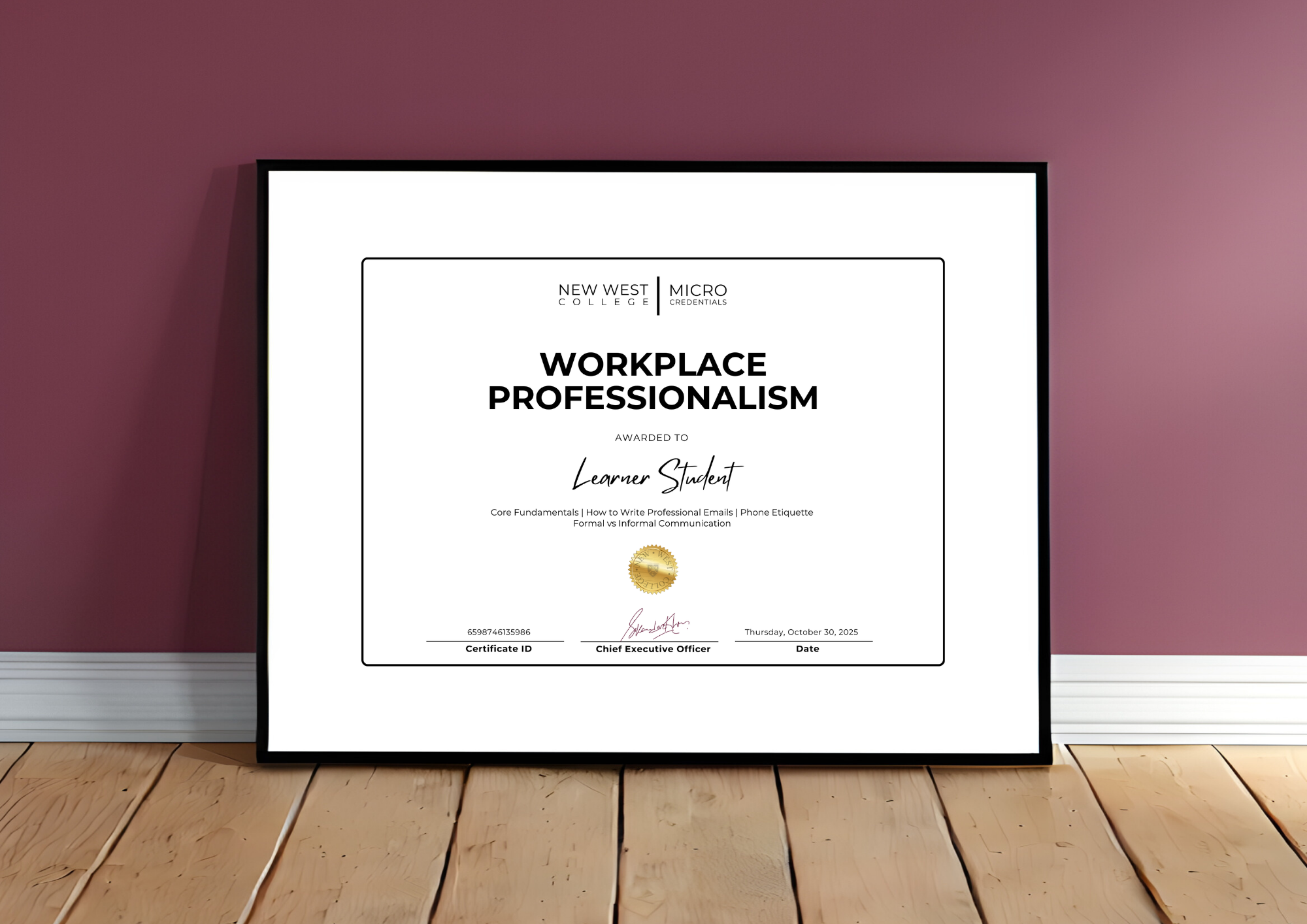
Earn this credential. Anywhere, anytime.
Learning Outcomes:
➊ Define professionalism and explain its impact on career advancement and workplace reputation.
➋ Demonstrate behaviors that reflect accountability, respect, ethical conduct, and reliability.
➌ Select appropriate communication mediums based on message type and situation.
➍ Distinguish between formal and informal communication and select an appropriate tone for various contexts.
➎ Align personal behavior with organizational expectations and codes of conduct.
Requirements:
There are no specific entry requirements for this Micro Credential, however, this credential is ideal for:
Professionals seeking to navigate workplace challenges.
Managers tasked with handling difficult conversations and handling employee conflicts in a professional manner.
Individuals seeking to enhance their professionalism in the workplace.
Course Content:
This course begins by defining professionalism as more than job title or status. Learners examine how acting in ways that demonstrate trustworthiness, accountability, competence, and respect influences career progression and workplace relationships. Through real-world examples, they explore expectations in professional settings and the consequences of unprofessional conduct. The course outlines core behavioral pillars including being polite and respectful, accountable, appropriate, ethical, and positive. Learners review practical strategies such as fulfilling commitments, managing emotions, maintaining composure, using company resources responsibly, resolving conflict privately, and contributing to a supportive work culture.
The course then shifts to communication as a primary expression of professionalism. Learners explore how to write professional business emails by evaluating when email is appropriate, structuring messages clearly, and applying five key traits: formality, polish, clarity, concision, and appropriateness. They examine the anatomy of an effective email, including subject lines, greetings, message structure, closings, and sign-offs, and analyze before-and-after examples to strengthen writing quality.
Next, learners develop business phone etiquette skills. They practice answering promptly, using professional greetings, maintaining a positive tone, practicing active listening, matching a caller’s pace, and closing calls effectively. Interactive scenarios reinforce how tone, patience, and solution-focused responses influence customer satisfaction and brand reputation.
The course also examines the distinction between formal and informal communication. Learners explore differences in word choice, grammar, punctuation, abbreviations, contractions, and pronoun use. They assess how audience relationship, workplace culture, and situational context determine tone. Emphasis is placed on viewing tone as a sliding scale and erring on the side of professionalism when uncertain.
Throughout the course, applied activities, sorting exercises, and scenario-based learning reinforce key concepts and help learners internalize professional habits across communication channels and workplace interactions.

20 Hours
Advanced Social Media Marketing equips learners with the skills to go from tactical posting to strategic brand storytelling. Students will leave the course ready to listen intelligently, engage meaningfully, measure precisely, and create content that connects—skills essential for any modern digital marketer.